
43 lines
3.2 KiB
Markdown
43 lines
3.2 KiB
Markdown
---
|
||
name: sqlite-on-the-ui-thread
|
||
description: Unlock the surprising speed of SQLite in Flutter for building responsive UIs, showcasing its ability to handle large datasets with synchronous queries and optimized configurations.
|
||
metadata:
|
||
url: https://rodydavis.com/posts/sqlite/ui-thread
|
||
last_modified: Tue, 03 Feb 2026 20:04:37 GMT
|
||
---
|
||
|
||
# SQLite on the UI Thread
|
||
|
||
|
||
[SQLite](https://www.sqlite.org/) is a lot faster than you may realize. In [Flutter](https://flutter.dev/) for example there is [drift](https://pub.dev/packages/drift), [sqlite\_async](https://pub.dev/packages/sqlite_async) and [sqflite](https://pub.dev/packages/sqflite) which allow for async access of data. But with [sqlite3](https://pub.dev/packages/sqlite3) you can query with sync functions! 🤯
|
||
|
||
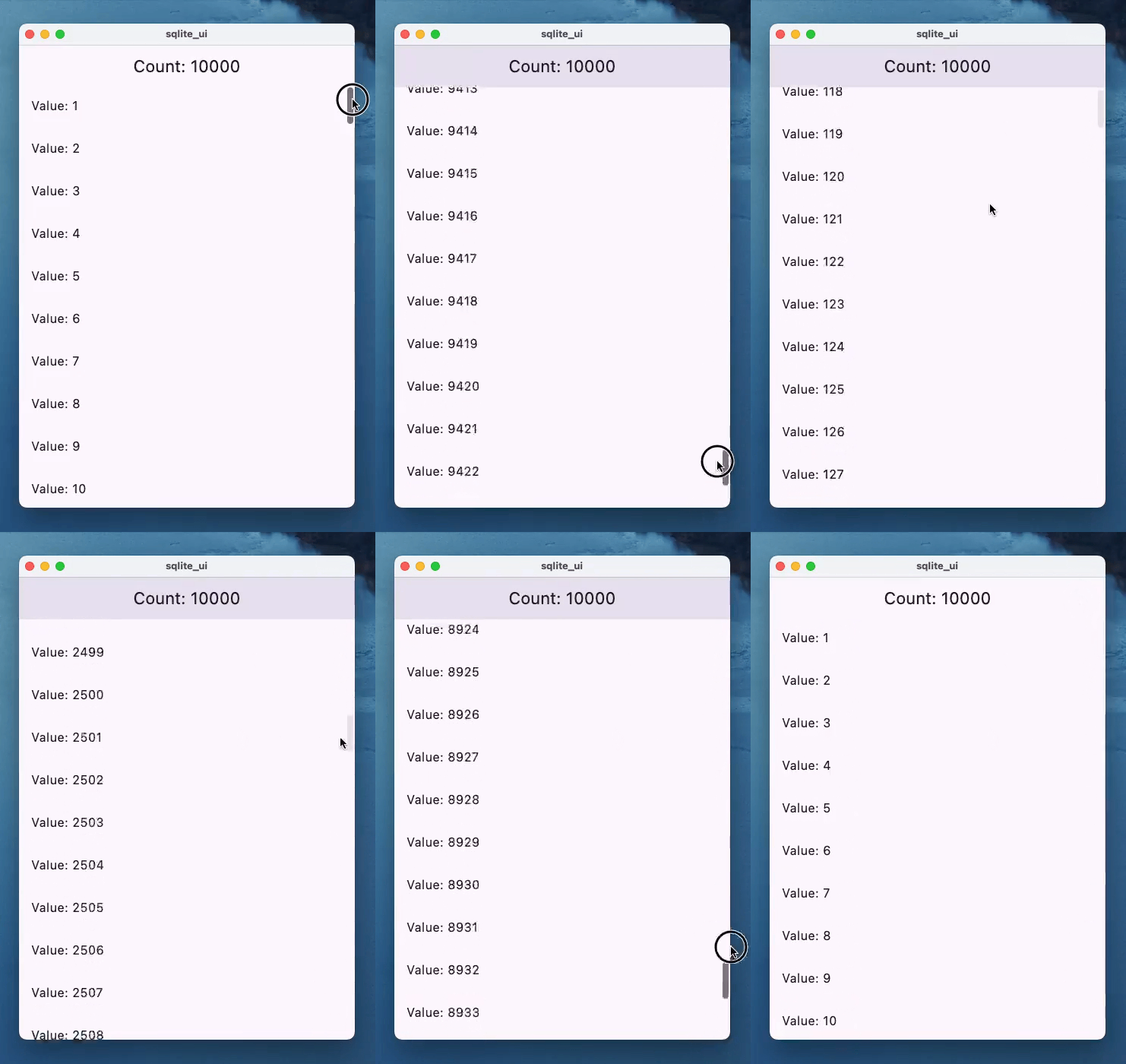
Here is a list view where there are 10000 items and each item is retrieved with a select statement 👀
|
||
|
||
|
||
|
||
Source: [https://gist.github.com/rodydavis/4a6dca4a2e1afc530ac93e94a76a594a](https://gist.github.com/rodydavis/4a6dca4a2e1afc530ac93e94a76a594a)
|
||
|
||
SQLite, when used effectively, can be a powerful asset for UI-driven applications. Operating within the same process and thread as the UI, it offers a seamless integration that can significantly improve component building.
|
||
|
||
Async/await does not mean you will be building the most performant applications, and in some cases will [incur a performance penalty](https://madelinemiller.dev/blog/javascript-promise-overhead/).
|
||
|
||
Even with extensive datasets, SQLite demonstrates remarkable efficiency. Its ability to handle millions of rows without compromising speed is a testament to its robust architecture. Contrary to the misconception of being solely a background-thread database, SQLite functions as a process-level library, akin to any other C-based library.
|
||
|
||
By strategically employing indexes and queries, developers can achieve nanosecond response times and mitigate N+1 query issues. The judicious use of views, indexes, and virtual tables is paramount in optimizing performance.
|
||
|
||
Complex join operations and the ability to retrieve only essential data for display further underscore SQLite's versatility. For example, when presenting a list view or cards, SQLite can efficiently fetch the required 30 items without undue overhead.
|
||
|
||
SQLite's flexibility extends beyond single-database scenarios. The [ATTACH](https://www.sqlite.org/lang_attach.html) feature enables the management of multiple databases within a single application. Additionally, the concept of isolates or workers allows for parallel processing, further enhancing performance and responsiveness.
|
||
|
||
From simple [key-value](https://rodydavis.com/sqlite/key-value) stores to intricate data modeling, SQLite's capabilities are vast. By applying appropriate [PRAGMAs](https://www.sqlite.org/pragma.html), such as WAL mode, developers can tailor SQLite's behavior to meet specific application requirements.
|
||
|
||
[Example PRAGMA](https://www.reddit.com/r/rails/comments/16cbiz9/the_6_pragmas_you_need_to_know_to_tune_your/):
|
||
|
||
```
|
||
PRAGMA journal_mode = WAL;
|
||
PRAGMA synchronous = NORMAL;
|
||
PRAGMA journal_size_limit = 67108864;
|
||
PRAGMA mmap_size = 134217728;
|
||
PRAGMA cache_size = 2000;
|
||
PRAGMA busy_timeout = 5000;
|
||
``` |